Nonnevot - Dutch Sweet Carnival Pastries

A typical Limburg delicacy eaten during carnival parades
*/ see below for origin.
Ingredients for 6 persons
500 gr flour
200 ml lukewarm whole milk
100 gr butter at room temperature
14 gr instant yeast (2 sachets)
25 gr sugar
10 gr salt
1 egg
Rapeseed (canola) or Sunflower oil for frying
Extra sugar
Ingredients for 6 persons
500 gr flour
200 ml lukewarm whole milk
100 gr butter at room temperature
14 gr instant yeast (2 sachets)
25 gr sugar
10 gr salt
1 egg
Rapeseed (canola) or Sunflower oil for frying
Extra sugar
Preparation
Dissolve the instant yeast in a little lukewarm whole milk along with some sugar
Wait 5 minutes.
Mix the flour, the remainder of the milk, the remaining sugar, the egg and the yeast
mixture and knead together to form a smooth dough.
Cut the butter into small pieces.
Add the butter with a pinch of salt to the dough and knead it again.
Place the dough in a bowl under a clean tea towel
Let it rise until it is double in size.
Remove the dough from the bowl and place it on the clean flat surface; flatten the dough into a pancake shape.
Fold the dough in half and let it rise under the tea towel for another 15 minutes.
Cut 30 cm long strips from the dough and roll into a thick sausage,
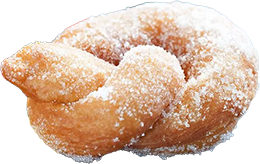
then tie it to make a bow or knot shape (see picture).
Let the unbaked nonnevotten rise for 10 minutes.
Heat the rapeseed oil in a deep fryer, or a heavy-based saucepan, to 180 C.
Deep fry the nonnevotten until golden brown on both sides.
Sprinkle the nonnevotten generously with sugar immediately after frying
to make sure the sugar will stick properly to the pastries.
*/ Where do nonnevotten come from ?
These pastries are one of the oldest pastries in the Netherlands.
The name nonnevot, or nun's buttocks, comes from the knotted shape of the pastry, resembling the knot on the back of a nun's tunic.
Nonnevot (also: shrik or poeffel) is a Limburg traditional pastry dating back to 1676 when they were gifted to French commanders in the town of Sittard. Since the pastry has traditionally been associated with carnival (in Limburgs: Vastelaovend). Nowadays it is sold year-round in regional bakeries.
Dissolve the instant yeast in a little lukewarm whole milk along with some sugar
Wait 5 minutes.
Mix the flour, the remainder of the milk, the remaining sugar, the egg and the yeast
mixture and knead together to form a smooth dough.
Cut the butter into small pieces.
Add the butter with a pinch of salt to the dough and knead it again.
Place the dough in a bowl under a clean tea towel
Let it rise until it is double in size.
Remove the dough from the bowl and place it on the clean flat surface; flatten the dough into a pancake shape.
Fold the dough in half and let it rise under the tea towel for another 15 minutes.
Cut 30 cm long strips from the dough and roll into a thick sausage,
then tie it to make a bow or knot shape (see picture).
Let the unbaked nonnevotten rise for 10 minutes.
Heat the rapeseed oil in a deep fryer, or a heavy-based saucepan, to 180 C.
Deep fry the nonnevotten until golden brown on both sides.
Sprinkle the nonnevotten generously with sugar immediately after frying
to make sure the sugar will stick properly to the pastries.
*/ Where do nonnevotten come from ?
These pastries are one of the oldest pastries in the Netherlands.
The name nonnevot, or nun's buttocks, comes from the knotted shape of the pastry, resembling the knot on the back of a nun's tunic.
Nonnevot (also: shrik or poeffel) is a Limburg traditional pastry dating back to 1676 when they were gifted to French commanders in the town of Sittard. Since the pastry has traditionally been associated with carnival (in Limburgs: Vastelaovend). Nowadays it is sold year-round in regional bakeries.
adapted from Véronique Pouw


